Domain Age Checker
Check any domain’s age instantly with our free Domain Age Checker. Get registration date, expiry date, and domain history in seconds. Try it now!
Domain Age Checker
Enter any website to see how old its domain is. You can check up to 5 websites at once.
One domain per line (or separated by commas). Up to 5 Domains.
Enter a domain and check
About Domain Age Checker
Most people ask how old a domain name is only after trouble starts. A domain age checker tool turns that credibility worry into publicly available registration records, so ownership history and the original registration date become verifiable facts, not guesswork.
In SEO, older domains rarely win alone; Google also weighs backlink relationships and content. Still, expiration schedules and name-server changes behind a website launched in 2013 reveal months, days and years of domain history analysis, which keeps a ten years old claim honest.
What Is a Domain Age Checker / What Is Domain Age
A domain that looks too new is not automatically weak, and an old one is not automatically strong. A domain age checker simply reports the initial date of registration, then calculating age in years, months and days, so webmasters can judge credibility with an exact time frame.
Historically, WHOIS ownership records were the only route to this number, and people read them by hand. Today a free tool pulls registrar details, expiration date and history in seconds, though search engines treat domain age as one ranking factor, never the whole story.
How to Use the Domain Age Checker / How to Check the Age of a Domain
Start with the search field: type the complete domain URL, and it works with or without www. I’ve found easy to use tools matter most when I’m rushing an audit. Click the Check Domain Age button, and the report appears within seconds, with no intricate procedures.
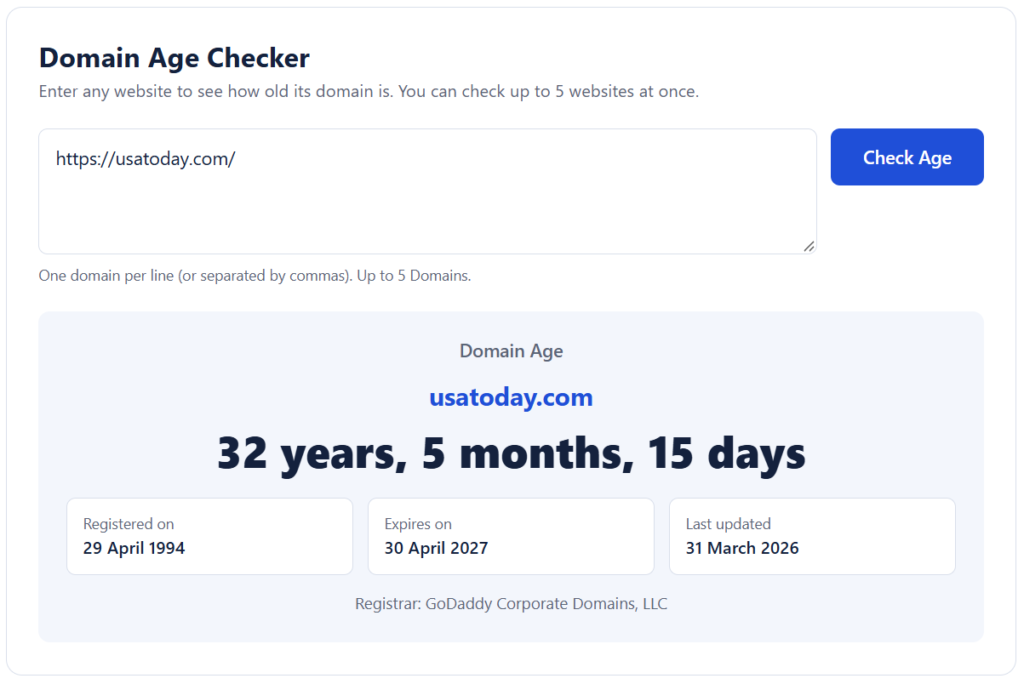
For bulk analysis, paste up to 5 domains and read the table that follows, though some versions accept one domain at a time. Each row shows creation date, expiration date, registrar details and name server details, so a single go covers registration data and expiry information.
The real-time domain data also includes organic traffic, paid traffic and IP address, which I check before any technical server analysis. Use the date of last update and domain updated date to spot recent changes, then run a DNS lookup if something looks odd.
Domain Age Checker: How Old Is A Website?
When a client asked me how old a domain is before deciding to buy it, I skipped guessing and ran a domain age checker. The WHOIS lookup showed the exact date it was first registered, plus expiry information. That creation date said more about trustworthiness than any sales pitch.
Why Would You Want To Know How Old A Domain Name Is?
I once trusted a well-written website until a domain age checker exposed its year of formation as last month. Now how long in business matters first, before I spend money on any e-commerce website again.
Digital marketers say older players always win, but I disagree. An amazingly designed website can hide a changed niche, while the date of domain registration quietly helps evaluate credibility and makes a more reliable judgment.
Why Is It Important To Check A Domain Age?
In my audits, domain longevity is rarely the headline, yet history analysis often explains odd search results. Mature domains carry a proven track record, while newcomers start from zero. That gap shows up as trust recognition and visibility, which long-standing industry leaders quietly enjoy as natural advantages.
Before investment opportunity evaluation, I check competitor domains and an indicator of legitimacy, because a problematic past can sink premium valuations. Businesses should treat established domains as assets, set achievable performance goals, and let search engine recognition guide future performance. Informed strategies protect digital reputation and online presence.
Why Check Domain Age / Why Is It Important
Honestly, a domain age lookup rarely tells the whole story, yet I check it before every site audits job. A recently registered domain with a troubled past can sink client projects, while long-established domains carry proven track record and brand trust. Knowing registration dates keeps realistic performance goals honest.
Is Domain Age Important?
Honestly, I used to treat domain age as a crucial factor, until testing a 6 months old domain showed a very small difference. Strong content and clean signals mattered far more than the calendar ever did.
Google reps have often denied any direct ranking boost, yet older sites usually hold a stronger backlink profile from years online. That correlation fools many SEOs, who credit age when history and links did the real work.
Domain Age Checker For SEO And Google Ranking
A decade-old site with weak SEO rarely beats a well-optimized new domain. I’ve seen newer domains outperform rivals because Google policy rewards content quality and user experience; domain age means nothing without backlinks, so organic search performance depends on optimization, not time.
Older vs Younger Domain Name
In my experience, an older domain rarely wins on domain age alone; newcomers with sharp content often outrank neglected mature domains. Still, established domains carry trust recognition and natural advantages, so I check backlinks and history analysis before treating longevity as a real authority signal.
Multiple / Bulk Domain Checking
Last spring I audited a client’s portfolio and a competitor’s by pasting multiple websites into one box. A single go with bulk analysis returned age data and registration-related data for up to 5 domains simultaneously, each report landing in seconds.
Information Included In The Results / Report
When I pull a report for a client, the first thing I scan is the original registration date, then name server configurations and registrar details. Together they give timeline information that no ranking tool can fake, and verified WHOIS records keep me honest about what I’m actually looking at.
Past the basics, I check scheduled renewal periods and domains approaching expiration, since ownership changes often hide there. Comprehensive registration history and hosting provider specifications round out precise insights, and the export-ready results let me hand reports to teammates without retyping anything.
What Domain Names Can Have Their Age Checked?
In my experience, most domain names can be checked, from google.com and amazon.com to youtube.com, apple.com, and wikipedia.org. These examples show domain age is rarely hidden. When a date cannot be retrieved, technical reasons are usually behind it, so I confirm with official domain registries.
Why Choose a Free Domain Age Lookup Tool?
I stopped paying for lookups once I saw how much authoritative data a free digital tools option gives away. A domain age calculator with no registration required means immediate analysis, no accounts, and no personal information handed over before you’ve even confirmed a single registration date.
Part of the appeal is the intuitive platform and mobile-optimized interface; I run checks on any device, mid-meeting if needed. You can copy results, save them, and drop them into presentations, which helps when acquisition prospects or competitor authority come up and recent updates matter.
Longer term, strategic expiry monitoring feeds renewal planning, and domain intelligence shapes digital strategy decisions and online decisions generally. Even basic analysis beats guessing, and avoiding hidden penalties or wasted money on a weak name is, honestly, where these checks pay for themselves.
Who Benefits from Domain Age Checker Tools?
Most people assume only SEOs care, but I’ve watched a web shop owner dodge a costly mistake after checking a competitor’s domain. Knowing how old a company is online, and whether it started doing business when it claims, quietly shapes smarter online decisions and strategic market understanding.
Anyone eyeing domains to buy gains the most. A buyer weighing premium valuations can spot a problematic past before money changes hands, while acquisition prospects with thin domain history look different once the date a domain was registered is verified against ownership transfers.
Brand managers lean on it for trademark claims and security purposes, confirming a site isn’t too new to trust. Marketers track older domains that build a reputation, while I use website age checker tools to set achievable performance goals with businesses I advise.
What You Risk by Ignoring Domain Age
Years ago, a client of mine skipped a domain age check and bought one of those premium names at auction. The backlink profile looked decent, but hidden penalties and poor histories surfaced within weeks, turning a promising launch into a slow, expensive cleanup.
Without insight into domain longevity, you can’t evaluate competitors or set realistic goals. Newer sites chasing long-standing industry leaders in competitive markets burn budget on visibility that future performance rarely supports, and smarter SEO strategies never get a chance.
Frequently Asked Questions
Many people confuse the two, but authority is earned, not simply counted in years. A domain registered long ago that did nothing carries little weight, while a younger site with strong backlinks can rank better. In my experience, domain age is just one of many weighting factors.
Honestly, a tool like this won’t lift rankings by itself, but it supports better decisions. I’ve used one to spot valuable aged domains before buying, and to judge competitive terms realistically. Checking domain age also sharpens your website’s SEO planning, though content and links still matter most.
Older domains rarely stay private. In my audits, a domain registration date plus years of history and an active record can expose present ownership through WHOIS databases, whereas new domains leave a thinner trail, giving owners full control over what detailed records reveal.
Symbolics.com, registered on March 15, 1985, is still the oldest domain online. When I trace its initial registration through official registration records, the full span of time feels remarkable. Verifying such chronological information shows why age of a domain carries real weight.
Yes, bulk analysis works, and I rely on it during competitor ranking reviews. Drop up to 10 domains into the search field, press the Check Domain Age button, and the domain ages appear in a single go. Simultaneously pulling registration data in seconds beats one domain at a time.